

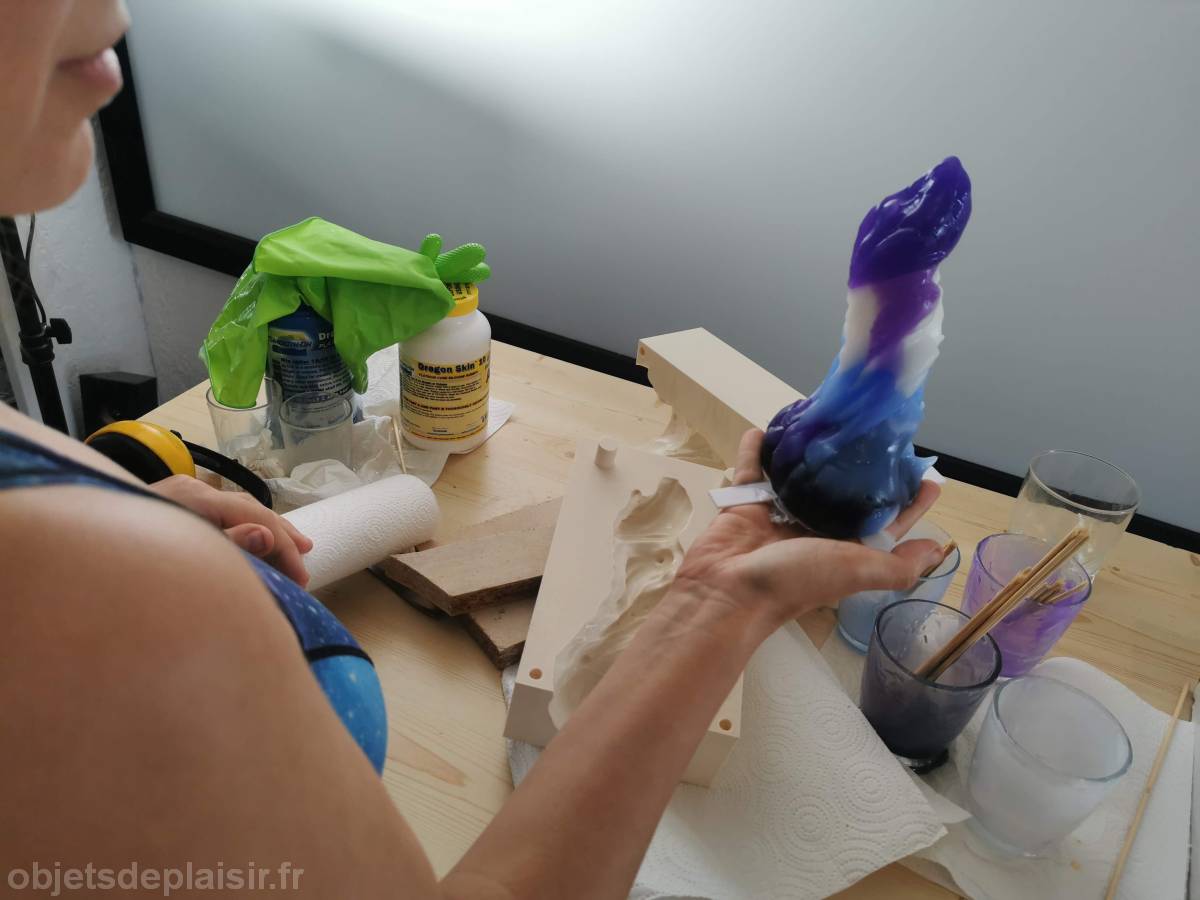
As I told you in a previous article, we decided to make a silicone dildo, and share this adventure with you.
Of course, this isn’t the only guide on how to make a silicone sex toy you can find. There are many methods out there. This is just a humble overview of our own experience.
Making a silicone dildo: the materials
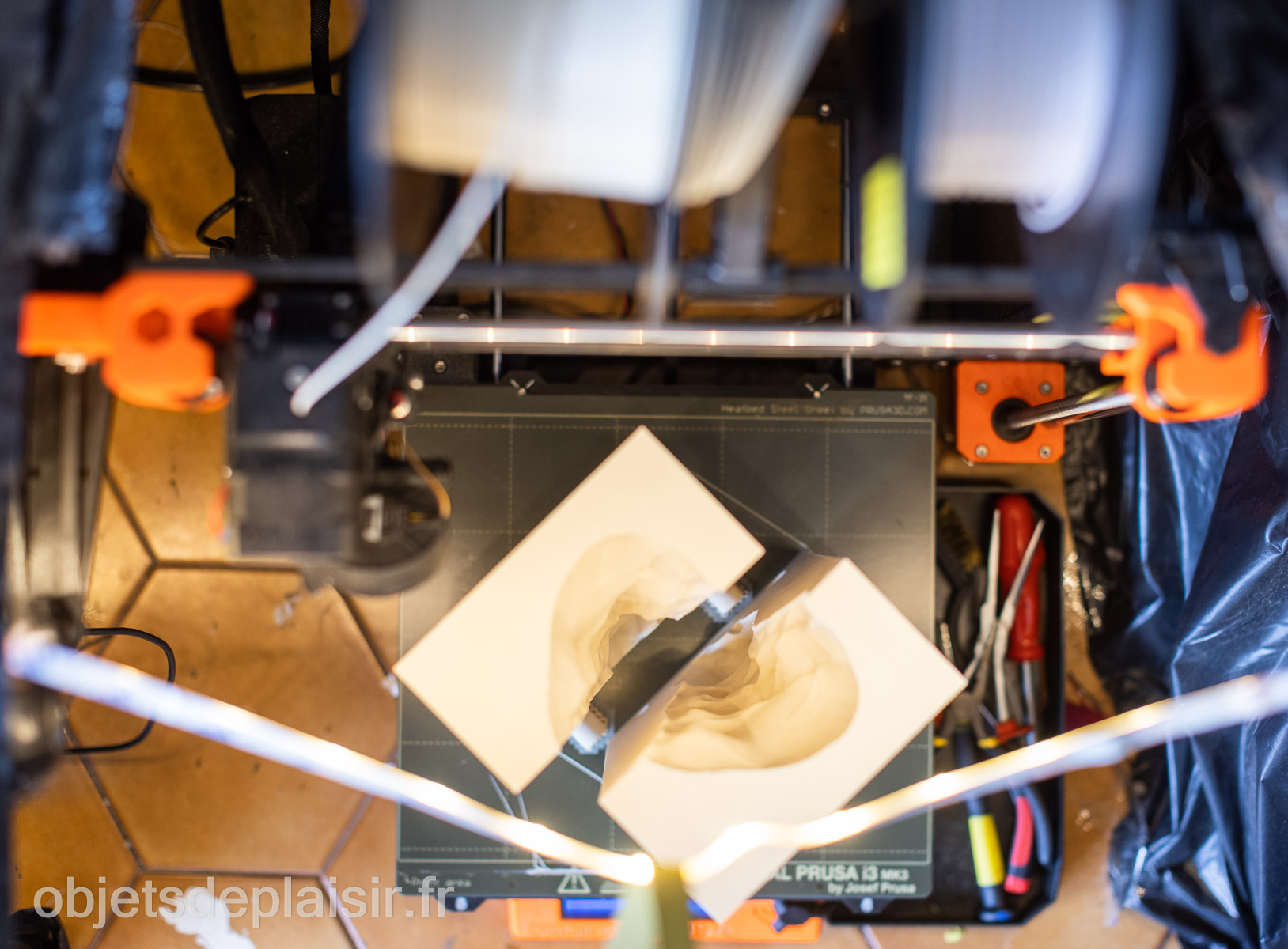
For the mould, we opted for a 3D-printed mould made of PLA. The reason for this choice is that we already own a 3D printer, which we bought to do some cool DIY projects for the blog that we’ll tell you about over time.
We already had the chance to print a 3D penis. In fact, it was this project that made us want to make a silicone dildo. This is because 3D-printed objects are porous and brittle, and therefore not body-safe. And yet, you can find many tutorials online on how to 3D print a sex toy, and you can even find them for sale on Etsy. But using such accessories as sex toys is dangerous.
The solution: use 3D printing to make a mould that allows you to make a silicone sex toy.
Materials for making the mould
The materials, to design and make the mould:
3D design software
This is down to your preferences and what you’re used to. He did a few modelling tests in VR with Adobe Medium, then created the penis prototype with ZBrush, before refining it and making the negative with Blender.
A 3D printer
Our printer is a filament printer. So we’ll need a spool of PLA, the most common plastic used for 3D printing, to make the mould.
Mod Podge
Mod Podge is a glue-sealant used for arts and crafts with paper, cardboard, fabric or wood. We will use it to smooth out the filament lines, imperfections and the seam between the two parts of the mould. If you printed the mould with a resin printer, it will be smoother and this step could be limited to just sealing the join between the two halves.
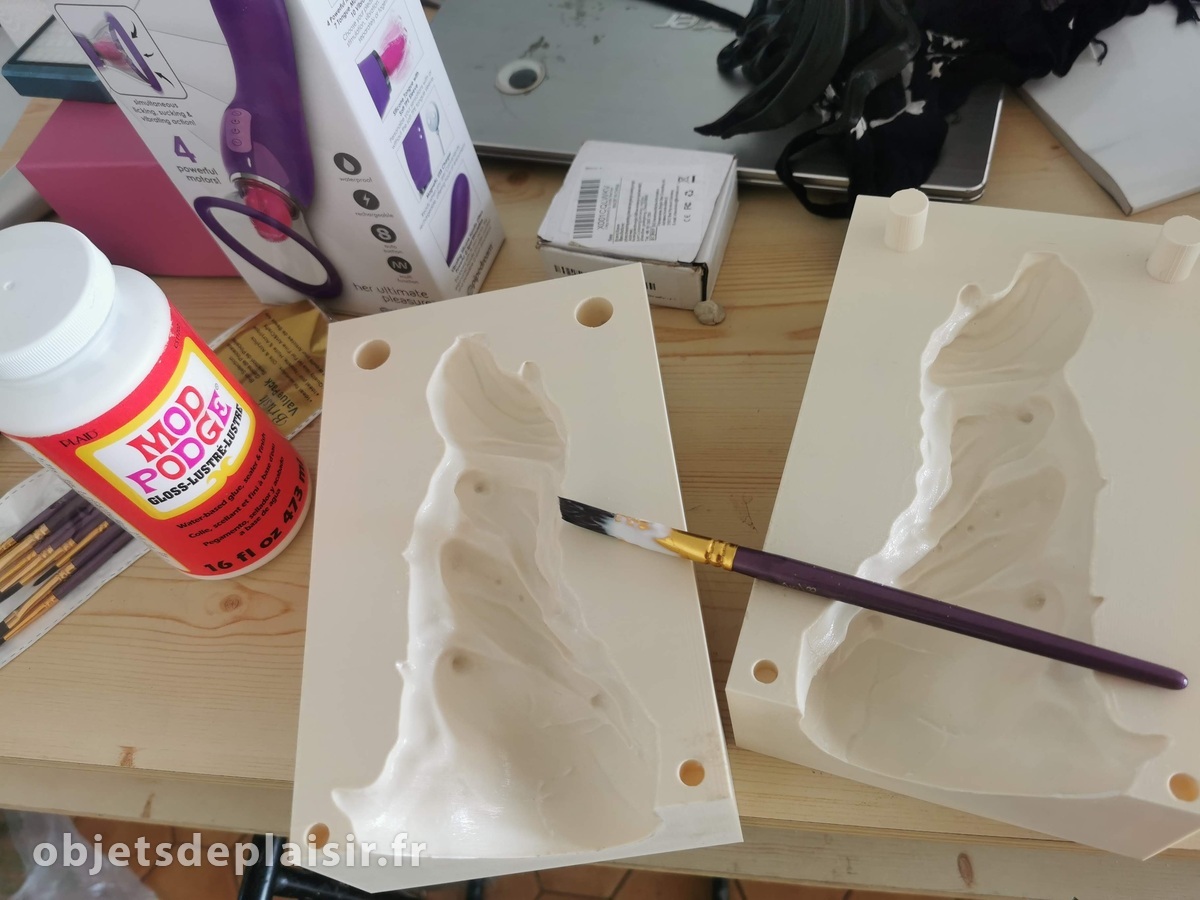
Note: The most common method is to make a positive of the dildo (either using 3D printing or from a material of your choice), and then make a silicone mould from it. However, we opted for a directly 3D-printed mould. This gives less perfect results, but it’s a faster solution that requires less silicone.
Materials for casting the dildo
The materials, for casting the sex toy:
- Gloves, to avoid getting your fingers too dirty. Silicone is a real pain to get off.
- A mould release spray, so the cast doesn’t stick to the mould. If the mould itself isn’t made of silicone, this isn’t strictly necessary.
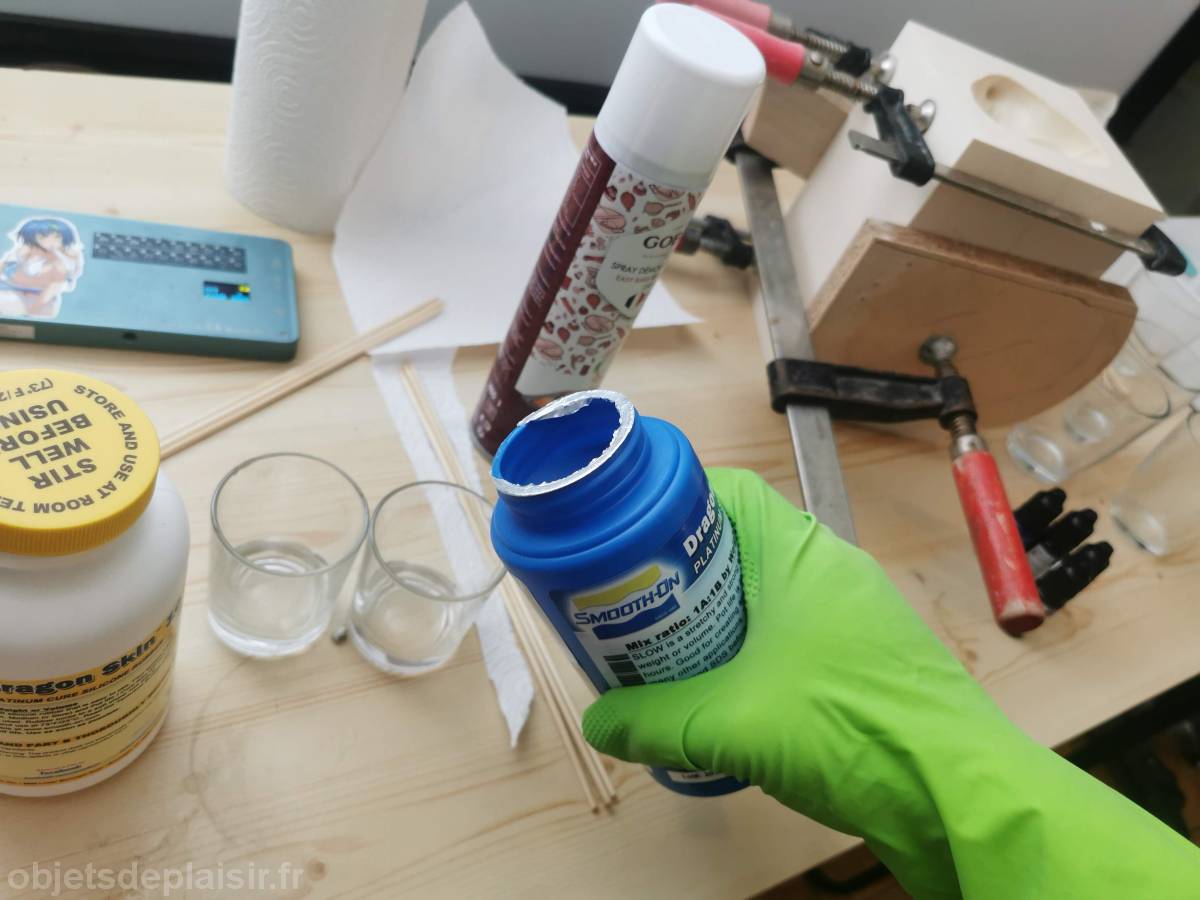
- Moulding silicone. I’ll go into more detail on this later in the article.
- Pigments for the silicone.
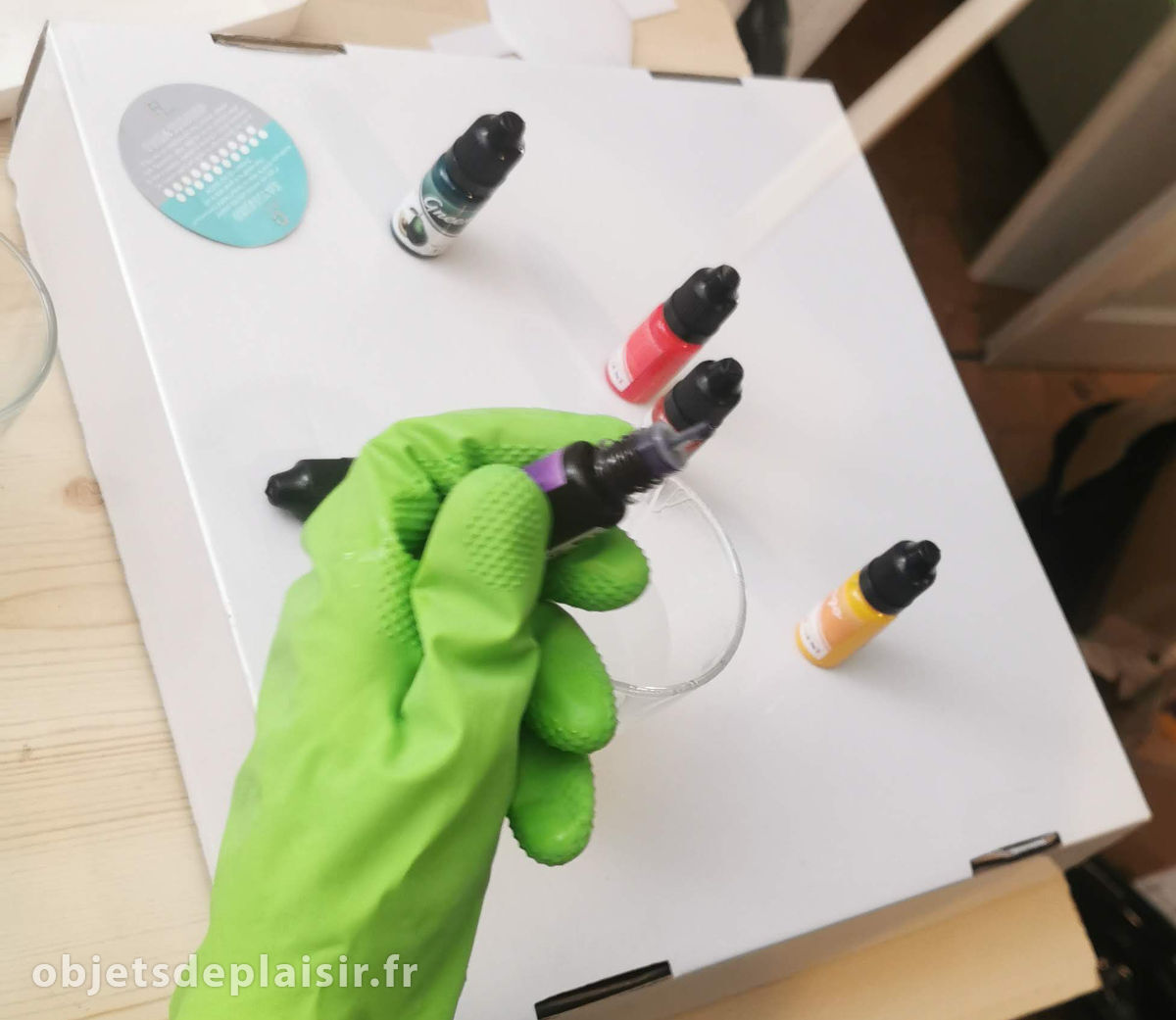
Several containers
You will need several containers to mix the two silicone components and the pigment. You’ll need one container per colour. Don’t use any glasses or mugs you’re fond of, as the containers will remain somewhat coated in silicone after use.
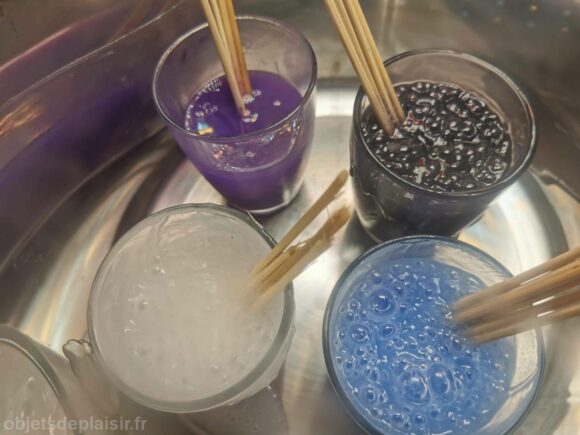
The containers must be large enough to prevent overflowing, even when vacuuming out the bubbles. You should plan not to fill them too much.
We didn’t really plan this part well, and opted for four identical glasses for a medium-to-large phallic-sized dildo, and… it overflowed.
 Something to mix with
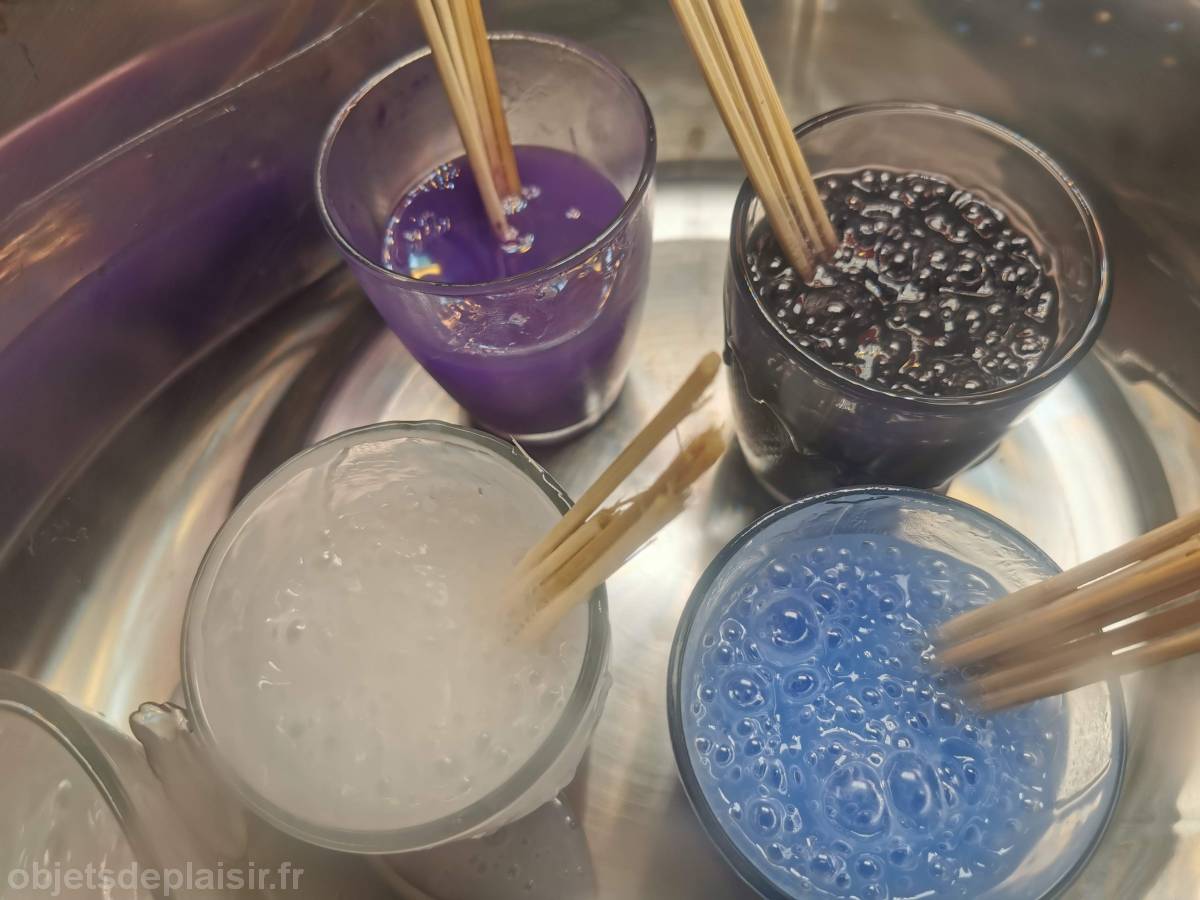
Having nothing suitable for stirring, we opted for wooden skewers broken in half, using several per glass to form a rod of sufficient thickness. And it was a bad idea. The skewers shed small wood splinters, and we struggled to remove them from the mixture.
We recommend buying disposable wooden spatulas, like lolly sticks, or permanently dedicating a few spoons to your crafting projects.
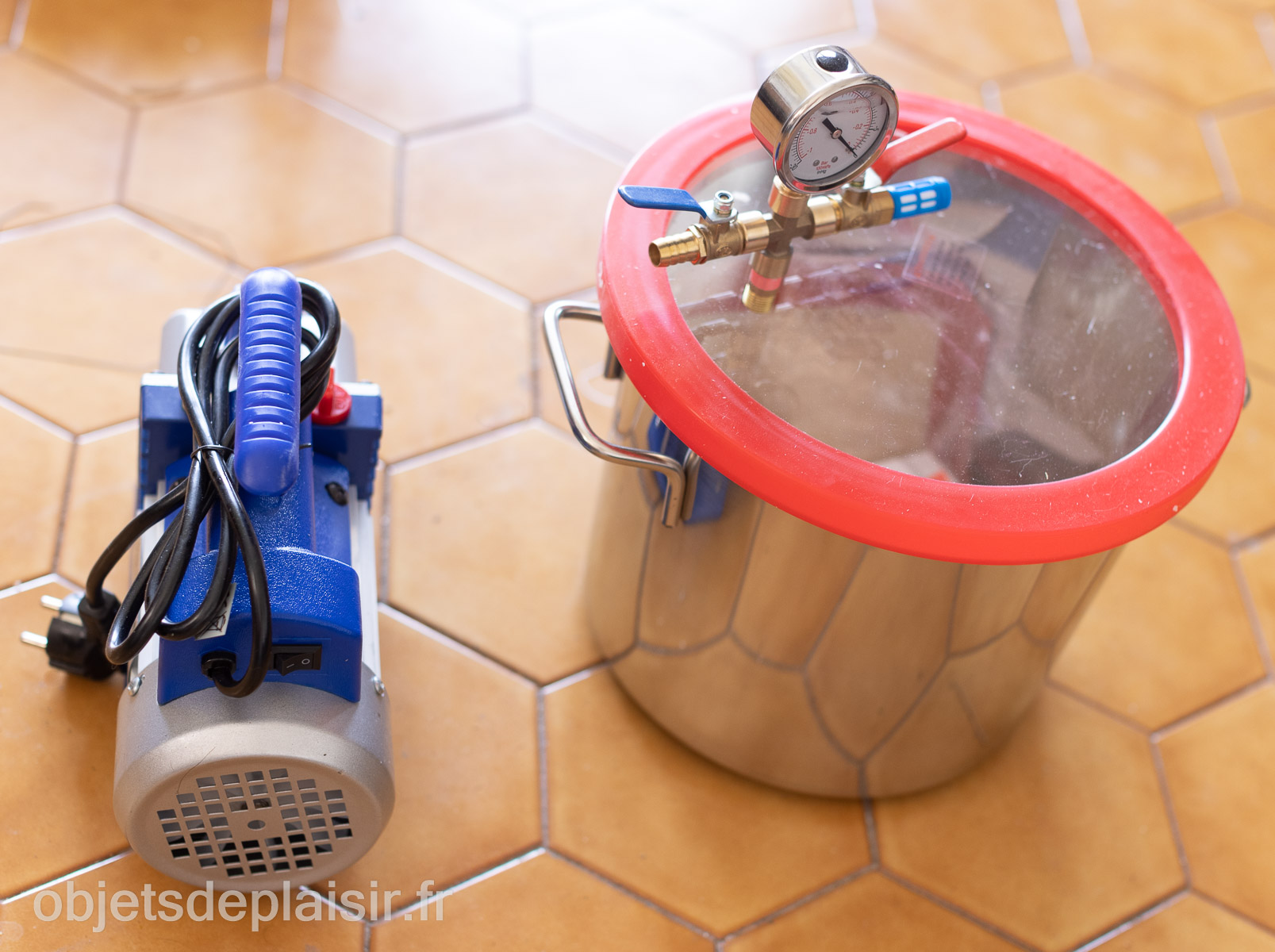
A vacuum pump
The vacuum pump will allow you to remove the bubbles from the silicone, so that the sex toy doesn’t have any holes.
Making a silicone dildo: choosing the silicone
Moulding silicone is sold as a two-part system that needs to be mixed.
But first, what is silicone? If you read its very long Wikipedia definition, you’ll learn that silicone is a product based on silicon, which is extracted from quartz.
Be careful, not all types of silicone are necessarily intended for making sex toys. To choose the right raw material to make a silicone dildo, several parameters must be taken into account.
Platinum-cure or peroxide-cure silicone?
First and foremost, it is essential to consider the quality of the silicone for making a dildo. It absolutely must be body-safe.
Of course, you won’t find any “special sex toy making silicone” in stores. Unless you count things like “Clone-a-Willy”, but I’m not sure the quality of their silicone versions is all that great. For an object designed to penetrate your body, you should at least use a material that is approved for food contact.
There are two types of so-called “food-grade” silicones. These come from a mixture of silicone polymers and a catalyst. The difference lies in the catalyst used in the reaction:
- Peroxide-cured silicones: this is the cheaper version, which can leach particles at high temperatures. To be avoided, for both sex toys and kitchen accessories.
- Platinum-cured silicones: they are more expensive, but safe for the body and durable.
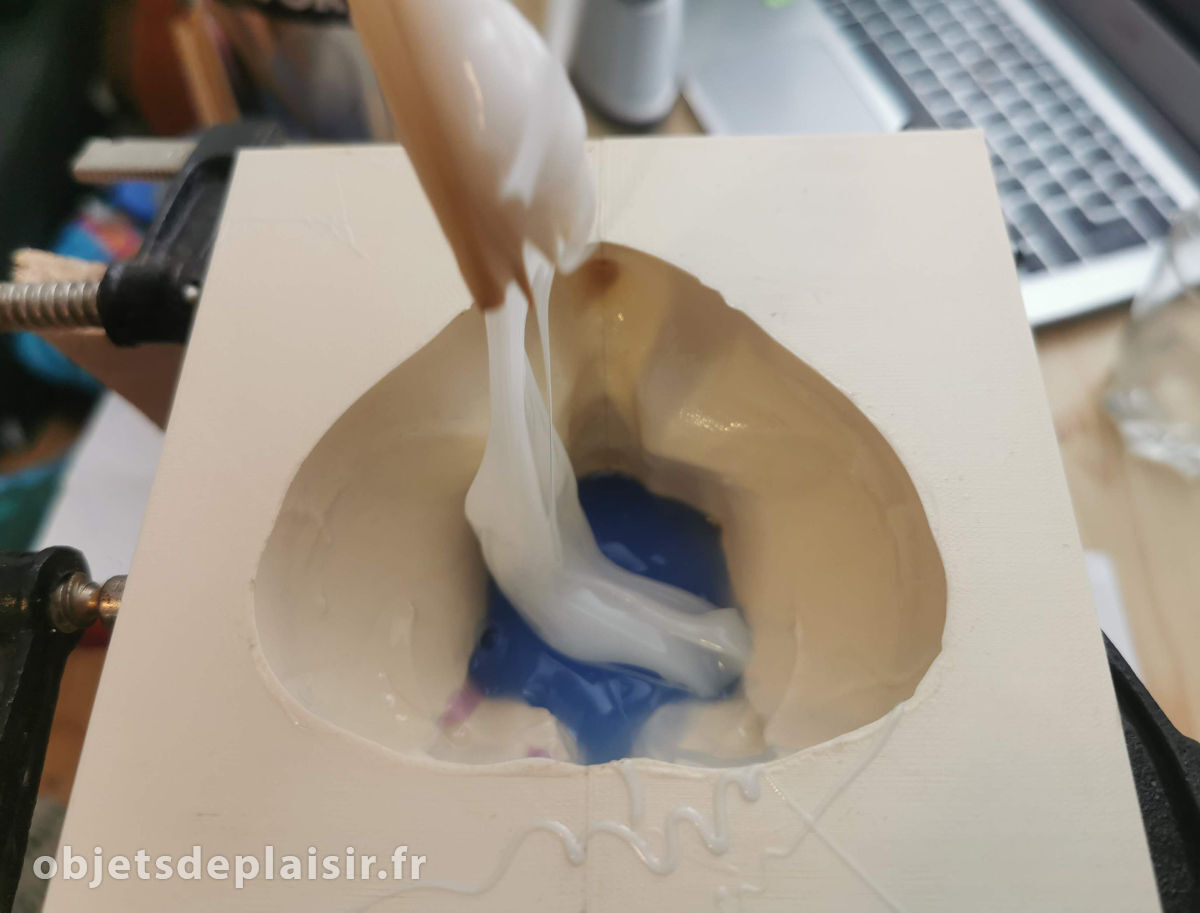
It’s the same story with the sex toys sold everywhere; they come in different qualities of silicone. Be wary if a cheap silicone sex toy retains a chemical smell.
We decided to buy two different body-safe platinum-cure silicones, so we could test and experiment.
Silicone hardness
Once you’ve chosen the type of silicone you’ll use to make your dildo, don’t think you’re done with the crucial decisions. Now it’s time to determine the firmness of your future sex toy. To quantify this, we use the Shore hardness scale.
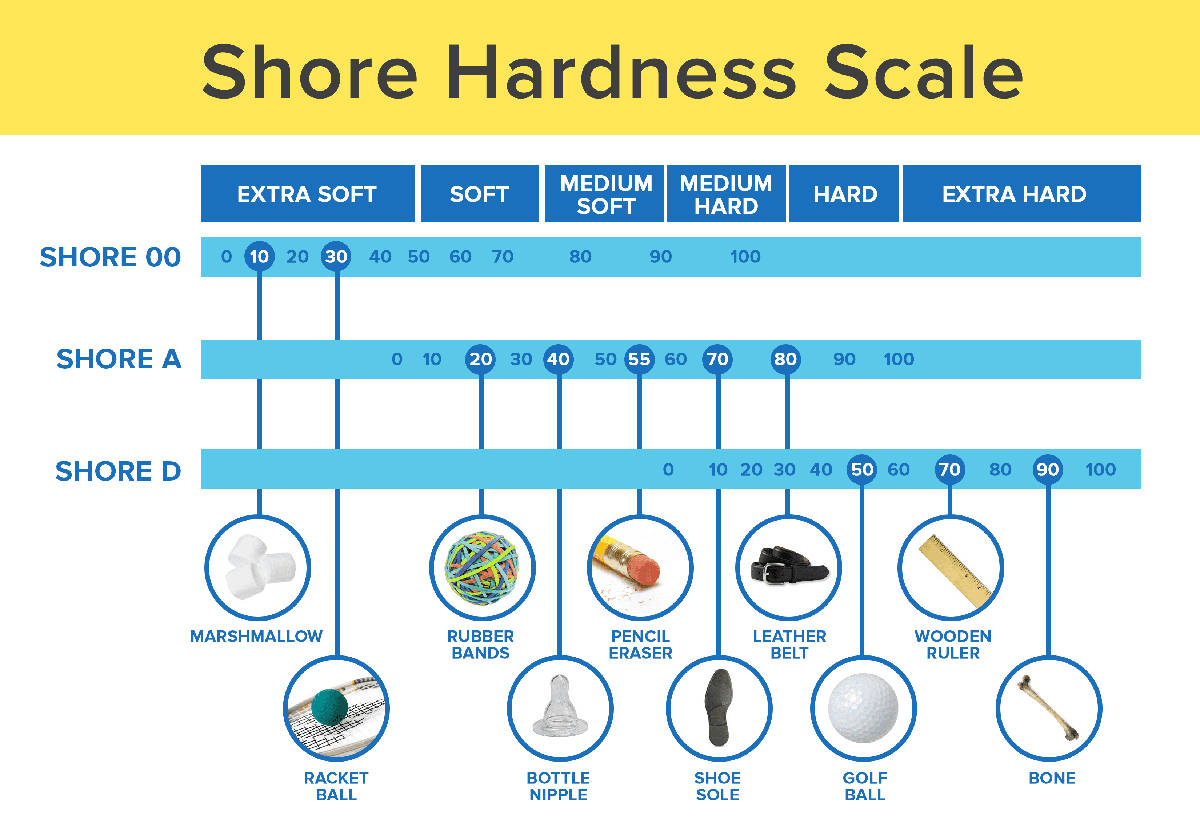
The websites that sell moulding silicone usually indicate where their products fall on this scale. This concept is also found when choosing flexible plastics for 3D printing.
Curing time
For the curing time, we advise you to choose the longest one possible. That’s what we did, opting for a silicone that cures in 45 minutes… And luckily so, because we really struggled to get everything done in time; it was a close call.
There you go. If you’ve followed this guide, you now have all the materials to make a dildo. In the next article, we’ll explain how we modelled the sex toy, and then the mould, in 3D.
Next time: the 3D design of the sex toy.
Making a silicone dildo (3/6): 3D design of the sex toy